

The Big Four
Title: The Big Four (Poirot #5)
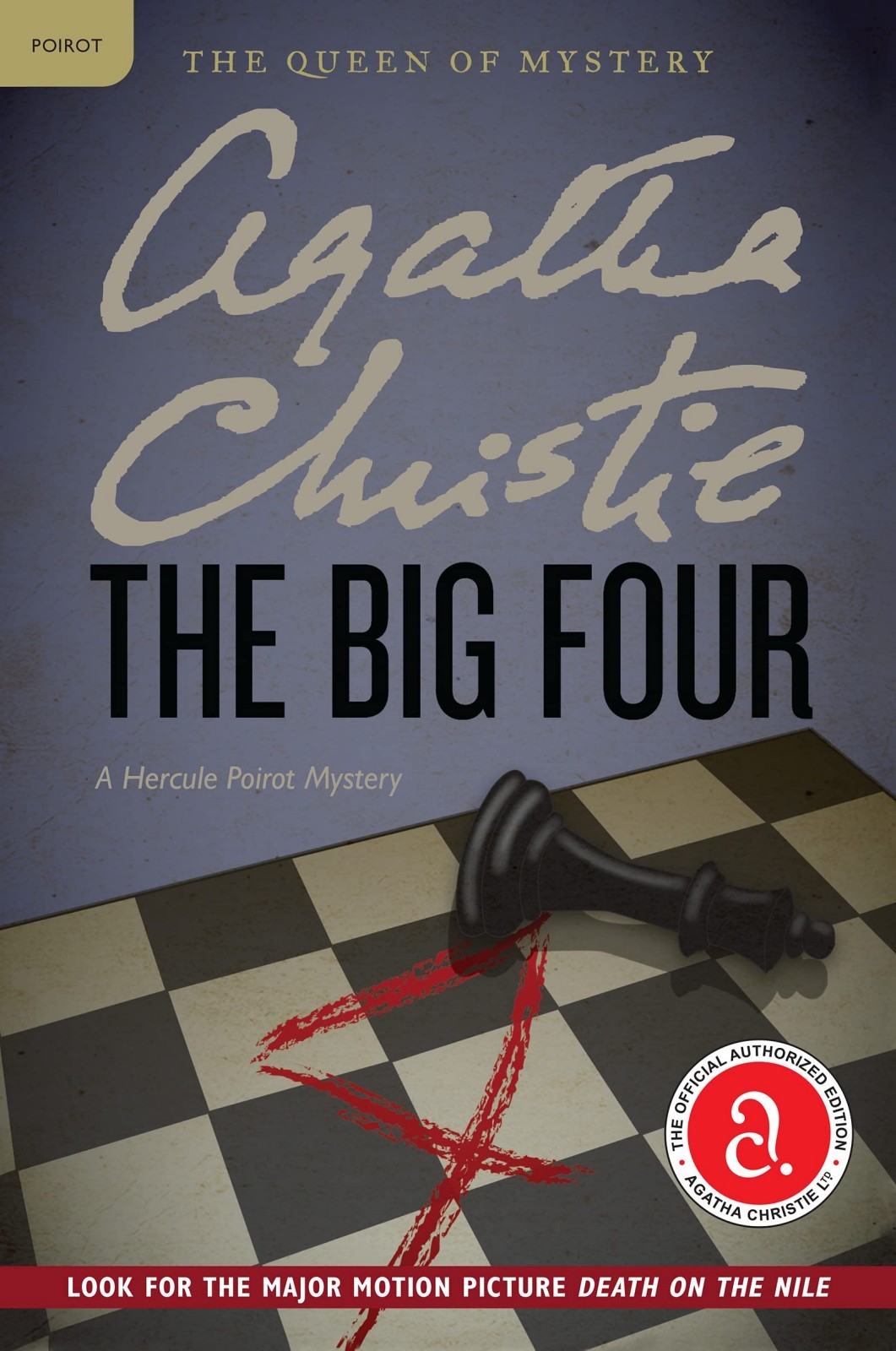
Author: Agatha Christie
Published in: 1927
Date read: 23rd January 2026
Score: 4/5
Genre: Detective, Crime, Classic
Plot: (Warning, may contain spoilers):
"The Big Four," published in 1927, is a significant departure from the typical "locked-room" mysteries associated with Hercule Poirot. Rather than a localized murder, this novel is a high-stakes international spy thriller, pitting Poirot against a global crime syndicate aiming for world domination.
The book is structured as a series of interconnected episodes (originally written as short stories), following Poirot and his faithful companion, Captain Arthur Hastings, as they are drawn into a world of kidnapping, political assassination, and global conspiracy.
The Plot:
The story begins when Hastings returns to London from his ranch in Argentina. His reunion with Poirot is interrupted by a mysterious, half-dead man who collapses in Poirot's flat. Before dying, the man scrawls the number "4" repeatedly and speaks of a massive international criminal organisation.
Poirot realizes he is facing "The Big Four," a quartet of brilliant and ruthless individuals from different parts of the globe who have combined their wealth, scientific knowledge, and political influence to paralyze the world's governments.
The narrative follows Poirot and Hastings as they travel across Europe, narrowly escaping several assassination attempts orchestrated by the syndicate. The cases they encounter—ranging from the mysterious death of a chess grandmaster to the kidnapping of a brilliant scientist—all lead back to the Four.
The Villains: The Big Four
The syndicate is composed of four distinct figures, each representing a different type of power:
Number 1: Li Chang Yen: The "brain" of the group. A powerful and shadowy Chinese political figure who pulls the strings from the East.
Number 2: Abe Ryland: An American multi-millionaire, representing the "wealth" of the organisation.
Number 3: Madame Olivier: A world-renowned French scientist, representing "scientific genius," specifically in the field of chemical and nuclear research.
Number 4: Claude Darrell (The Destroyer): A master of disguise and a cold-blooded assassin. He is the most immediate threat to Poirot, frequently appearing in various identities to sabotage the detective.
The Climax and "Achille Poirot"
As the conflict escalates, Poirot realizes he cannot defeat the Four through standard means. In a famous and controversial twist, Poirot appears to be killed in an explosion. Shortly after, a man claiming to be Poirot’s twin brother, Achille Poirot, appears to take up the hunt. (It is later revealed that Achille was simply Hercule in a clever disguise, used to lull the Big Four into a false sense of security).
The final confrontation takes place in the syndicate's secret mountain headquarters in the Dolomites. Poirot lures the leaders into a trap, resulting in a spectacular explosion that destroys the headquarters and the leaders of the Big Four. With the "brains" of the organization gone, the global threat is neutralized.
"The Big Four" remains a unique entry in the Poirot canon, showcasing the detective in a "super-sleuth" role more akin to Sherlock Holmes or James Bond than a traditional private investigator.
Comments:
Very enjoyable, this one was particularly far reaching and showed lots of other sides to the characters. I did keep wandering about Hastings' wife and why it was OK to abandon her for so long.
Books that we've read by Agatha Christie (20):
The Mysterious Affair at Styles (Hercule Poirot, #1) (1920), The Secret Adversary (Tommy and Tuppence Mysteries, #1) (1922), The Murder on the Links (Hercule Poirot #2) (1923), The Man in the Brown Suit (Colonel Race, #1) (1924), Poirot Investigates (1924), The Secret of Chimneys (1925), The Murder of Roger Ackroyd (Hercule Poirot, #4) (1926), The Big Four (Poirot #5) (1927), The Mystery of the Blue Train (Poirot #6) (1928), The Murder at the Vicarage (Miss Marple #1) (1930), Black Coffee (Hercule Poirot #7) (1930), The Thirteen Problems (Miss Marple, #1) (1932), The Peril at End House (Hercule Poirot #8) (1932), Murder on the Orient Express (1934), The ABC Murders (Hercule Poirot #13) (1936), Death on the Nile (Hercule Poirot #18) (1937), And Then There Were None (1939), The Labours of Hercules (Hercule Poirot #26) (1947), Crooked House (1949), A Caribbean Mystery (1964)
This page was updated on: 6th January 2026